
SIMO Motor: Analysis of Insulation and Drying Issues in High-Voltage Motors
SIMO Motor technical documentation: High-voltage motors are increasingly widely used in industry; however, issues associated with them continue to arise during operation. This article provides a comprehensive discussion of insulation failure in high-voltage motors and proposes several process-level improvement methods. Depending on overseas power grids, high-voltage motors are also available at voltage levels of 3300 V and 6600 V. Since the power output of high-voltage motors is proportional to the product of voltage and current, increasing the power of low-voltage motors becomes challenging—or excessively costly—when current must be limited by the conductor’s allowable current-carrying capacity (e.g., 300 kW / 380 V ). Thus, higher voltage is required to achieve high-power output. Additionally, as part of electromechanical integration, what are several moisture-proof and drying methods for high-voltage motors?
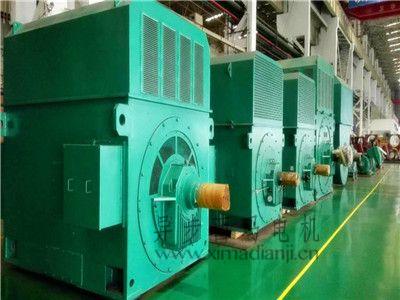
Initially, high-voltage motors were widely applied across multiple industries, including water conservancy, papermaking, metallurgy, mining, and power generation. However, high-voltage motors face challenges such as stator winding insulation degradation and low dielectric strength of insulation. Aging assessment of motors can accurately reflect their aging condition. Such assessments also provide valuable lessons for factory acceptance testing of newly manufactured motors.
In recent years, with the sharp increase in market demand for steel, China’s ferroalloy industry has grown rapidly; high-voltage motors are now widely deployed within this sector. Concurrently, failures occurring during high-voltage motor operation—and the resulting losses—have grown significantly. The operating environment for electrical work is extremely demanding.
Practical experience over many years shows that energized operation is a reliable indicator of normal high-voltage motor operation; all aspects of operation must be thoroughly addressed, and no minor detail may be overlooked. Individual drying of large-capacity high-voltage motors is not feasible. The iron-loss drying method—using the motor’s own stator core loss—is highly practical and widely applicable. For safety, high-voltage motors are also available at voltage levels of 3300 V and 6600 V depending on overseas power grids. Since the power output of high-voltage motors is proportional to the product of voltage and current, increasing the power of low-voltage motors becomes difficult—or prohibitively expensive—when current is constrained by the conductor’s allowable current-carrying capacity (e.g., 300 kW / 380 V ). Higher voltage is therefore required to achieve high-power output.
SIMO Motor recommends the iron-loss drying method for drying large-capacity motors already installed in place—especially those whose removal, disassembly, or relocation is impractical. Assessing insulation deterioration in large motors holds broad application prospects. Furthermore, personnel must accumulate experience in identifying problems, and actively engage in development, research, and continuous improvement.